
.png)
Family Reunification
At the heart of MAS Immigrant Justice Center’s work is a simple but profound truth: families belong together. In a system that too often separates, delays, and overlooks the human cost of immigration barriers, MASIJC has made family reunification not just a service, but a sustained commitment to restoring wholeness where it has been fractured.
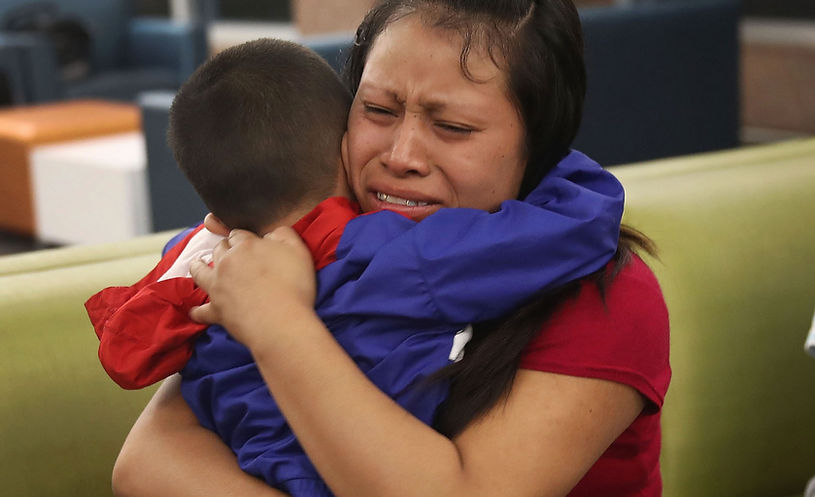
Over the past year, MASIJC has successfully guided numerous families through the complex and often overwhelming reunification process, reuniting parents with children, spouses with one another, and siblings long divided by borders, bureaucracy, and fear. These cases require far more than paperwork. They demand precision in petition filings, persistence in navigating agency delays, and a deep understanding of the legal pathways that make reunification possible, whether through immediate relative petitions, humanitarian relief, or adjustment of status.
Family reunification through U.S. Citizenship and Immigration Services allows U.S. citizens and lawful permanent residents to bring certain family members to the United States.
The process begins when the sponsor files Form I-130 (Petition for Alien Relative) to prove the qualifying relationship, such as spouse, child, parent, or sibling. If the petition is approved, the next step depends on whether a visa is immediately available. Immediate relatives of U.S. citizens can proceed more quickly, while other family categories may face waiting periods due to annual limits.
If the family member is already in the U.S., they may apply for Adjustment of Status. If they are abroad, they complete consular processing through the U.S. Department of State. The sponsor must also submit an Affidavit of Support to show financial ability to support the relative.
Eligibility requires a valid family relationship, a qualified sponsor, and that the beneficiary is admissible to the United States.
MASIJC’s success in this area is reflected not only in approvals, but in the stability that follows. Families once separated by years of uncertainty are now living under the same roof, children are reunited with caregivers at critical stages of their development, and spouses are no longer forced to build lives across continents. These outcomes are the result of careful legal strategy, relentless follow-up, and an unwavering belief that family unity is not a privilege. It is a right that must be defended.
In particularly complex cases, MASIJC has overcome barriers such as prior removal orders, inadmissibility issues, and prolonged administrative delays, crafting legal solutions that reopen pathways where none seemed to exist. The organization’s ability to move cases forward, even in the face of systemic obstacles, has made it a trusted advocate for families who have nowhere else to turn.
But beyond the legal victories lies something deeper. Family reunification is not simply about immigration status. It is about restoring emotional bonds, rebuilding support systems, and allowing individuals to heal from the trauma of separation. MASIJC understands that when a family is reunited, the impact extends beyond the household. It strengthens entire communities.
And still, the need continues. For every family reunited, many more remain divided by circumstance and policy. MASIJC’s work continues because it must, because no child should grow up without their parent, no spouse should live in indefinite separation, and no family should be denied the chance to be whole.